
Sometimes, a legal problem begins with something that looks very small.
A phone call from the police. A notice delivered to your home. A disagreement that suddenly turns into a complaint. Or a court document that you do not fully understand.
At first, you may think the situation will resolve itself.
But after a few days, you realise something important: You do not know what to do next.
This is often when people start searching for Top Advocate Legal Consultation in Bhopal.
However, before meeting an advocate, there is something worth understanding.
A legal consultation is not simply about explaining your problem. It is about identifying the legal issues, understanding possible remedies and deciding what steps may be appropriate.
And the right questions can make that conversation much more useful.
Your First Legal Consultation: What Really Matters?
Imagine two people facing similar criminal allegations.
One visits a legal professional without bringing any documents. They explain the situation from memory but cannot remember important dates.
The other carries the FIR, police notice, previous court papers and a short timeline of events.
Both may have valid concerns, but the second person has made it easier to understand the available facts.
Legal decisions depend on details, and missing information can change how a case is assessed.
Before discussing possible legal remedies, it is useful to establish what has happened, what documents exist and whether any immediate deadline applies.
Five Questions Worth Asking During Legal Consultation
You do not need to understand every legal provision before visiting an advocate. But a few simple questions can help you understand your position.
1. What is the actual legal issue in my case?
People sometimes describe their problem differently from how the law treats it.
For example, receiving a police notice does not necessarily mean that a person has been arrested or found guilty.
Understanding the specific allegations and applicable legal provisions is the first step.
2. Do I need to take immediate action?
Some situations require urgent attention, particularly when they involve an arrest, court summons, procedural deadline or risk of losing a legal remedy.
Other matters may require document verification before any application is prepared.
The important thing is to identify whether a deadline exists rather than acting out of panic.
3. Which court or authority has jurisdiction?
Not every legal dispute begins in the same court.
In Bhopal, criminal proceedings may involve the competent Magistrate Court or Sessions Court. Certain matters may also come before the High Court of Madhya Pradesh, depending on jurisdiction and applicable law.
Understanding the appropriate forum helps avoid unnecessary procedural mistakes.
4. What documents should I arrange?
The answer depends on the type of legal matter.
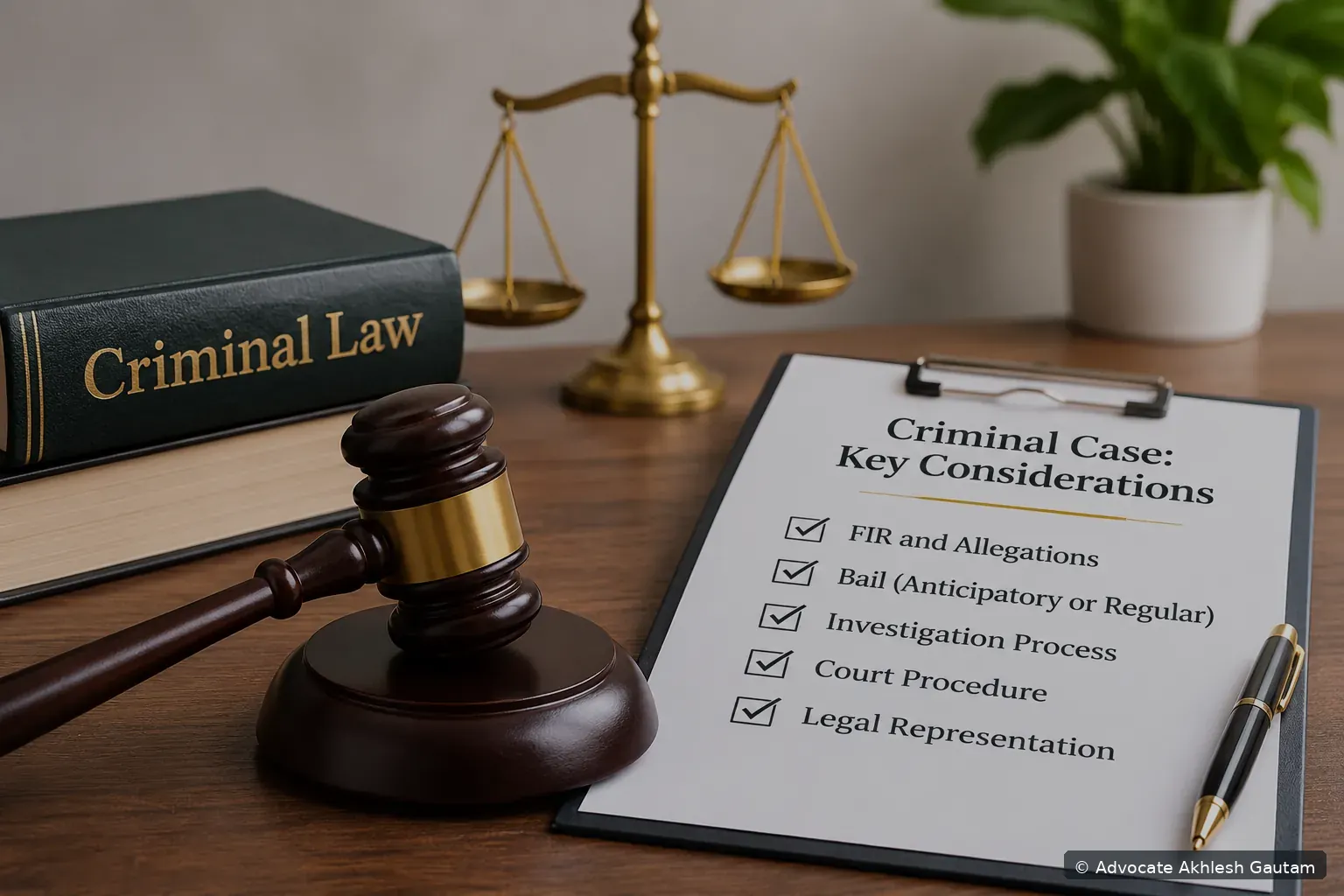
For criminal proceedings, relevant documents may include:
FIR or police complaint
Police notice or summons
Arrest-related records, where applicable
Previous court orders
Charge sheet, if available
Relevant messages, records or other supporting evidence
Not every document is required in every case.
5. What are the possible outcomes and difficulties?
A useful consultation should explain the available legal options, relevant conditions and possible difficulties.
No responsible assessment can guarantee the result of a court proceeding.
Understanding uncertainty is just as important as understanding the remedy.
A Police Notice Does Not Always Mean Arrest
This is something many people misunderstand.
Receiving a police notice can be frightening, particularly if the person has never dealt with a criminal investigation.
But the legal meaning of a notice depends on the provision under which it was issued and the circumstances of the case.
Under the Bharatiya Nagarik Suraksha Sanhita, 2023 (BNSS), procedures exist for police investigations, arrest-related safeguards and the rights of persons involved in criminal proceedings.
For example, Section 38 BNSS recognises the right of an arrested person to meet an advocate of their choice during interrogation, subject to the provision's conditions.
A person receiving a police notice should understand its requirements and respond through the appropriate legal process.
Ignoring a notice without understanding its legal consequences can create avoidable difficulties.
Why Legal Consultation Before Filing a Case Can Be Useful
People sometimes assume that filing a complaint or approaching a court is always the first step.
But different situations require different legal approaches.
Consider these examples:
Situation A: A person receives a criminal complaint.
The immediate concern may be understanding the allegations, police procedure and whether any protection or response is necessary.
Situation B: An accused person's bail application has been rejected.
The next step may involve examining the rejection order, applicable bail provisions and remedies available before the competent court.
Situation C: A person receives a court summons.
The priority may be understanding what the summons requires, the scheduled appearance and the consequences of failing to comply.
Although all three situations involve legal proceedings, their procedures and immediate priorities are different.
This is why identifying the legal issue is often more important than immediately preparing an application.
The Importance of Honest Information
There is another aspect of legal consultation that people sometimes overlook.
An accurate explanation of the facts is essential.
Some people leave out details because they believe those facts may weaken their position.
Others provide only the documents they consider helpful.
However, incomplete information can make it difficult to assess legal risks and procedural options.
A clearer approach is to explain the relevant events accurately, disclose existing court orders and identify documents that may be missing.
Legal assessment becomes more meaningful when it is based on a complete picture rather than assumptions.
Can You Seek Legal Advice Without Having All the Documents?
Yes. An initial consultation may still help identify what information is missing and which documents should be obtained.
For example, someone may know that an FIR has been registered but may not yet have a copy.
Another person may have received a notice but may be unsure what legal provision applies.
In such cases, the immediate purpose may be to understand the next procedural step and determine which records are necessary.
The absence of complete paperwork does not automatically prevent a preliminary discussion.
What Should You Understand Before Leaving a Consultation?
A legal consultation becomes more useful when you leave with a clearer understanding of your situation.
You should ideally know:
What the main legal issue appears to be.
Whether any immediate action or deadline requires attention.
Which documents need further review.
Which legal procedures may be relevant.
What questions remain unanswered.
What possible risks or limitations should be considered.
Sometimes, the most valuable outcome is identifying what should not be done without further legal assessment.
Final Thoughts: Understand Your Legal Position Before Acting
Legal problems often feel more complicated when people do not understand the process.
A police notice, criminal complaint or court proceeding can create anxiety, especially when personal liberty, family responsibilities or reputation may be affected.
But decisions should not be based only on fear, assumptions or advice from unrelated cases.
The first step is to understand the facts. The next is to identify the legal options.
If you have a legal matter in Bhopal and need clarification about the applicable procedure, you may visit our office with the available documents for a case-specific consultation.
Disclaimer: This article is published for general legal information and awareness. It is not a substitute for professional legal advice. Legal procedures and available remedies depend on the facts of each case, applicable laws and judicial orders. No particular legal outcome is guaranteed.

Reader comments
Write a comment
Your email remains private. Comments are reviewed before publication.